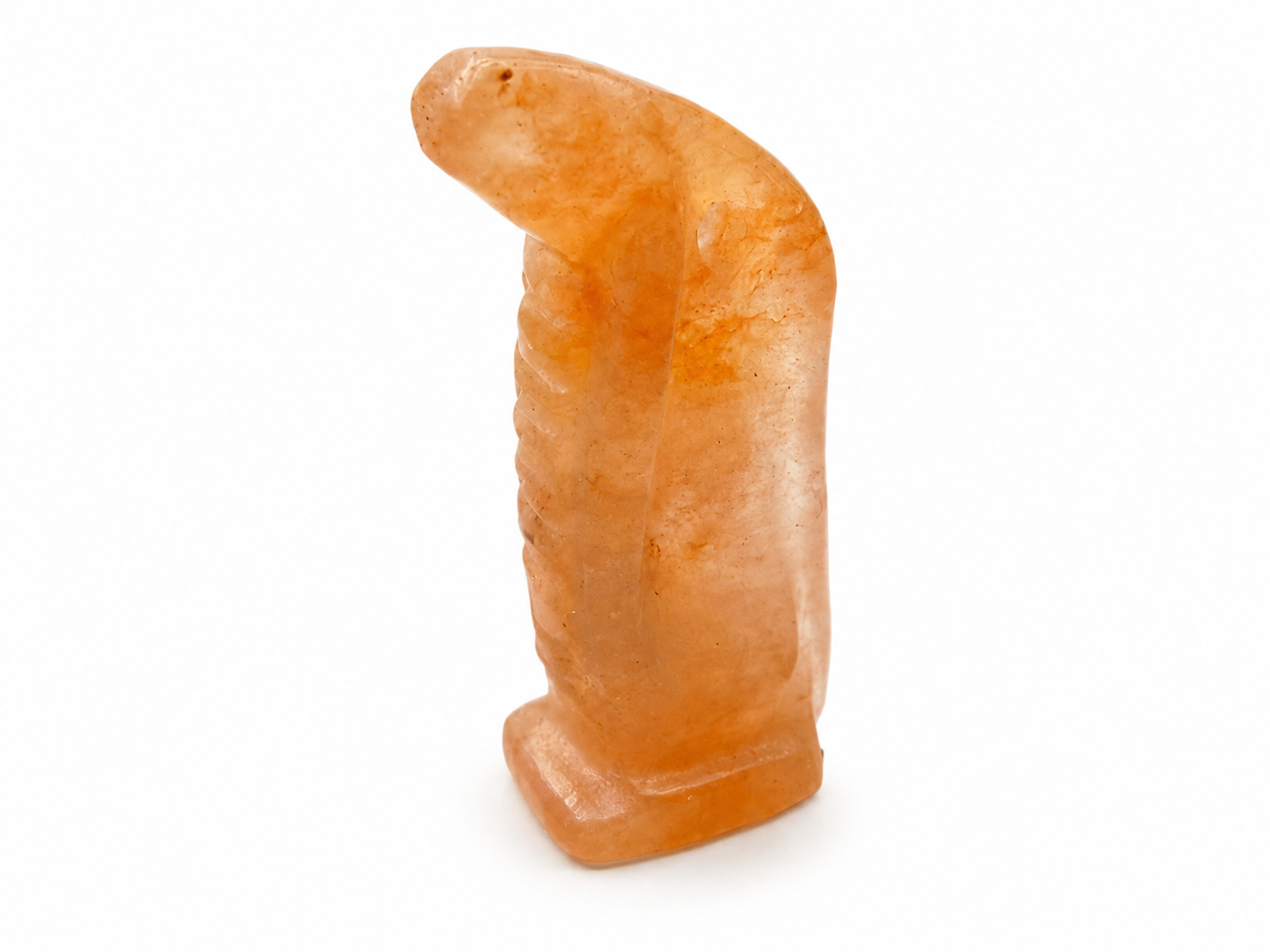
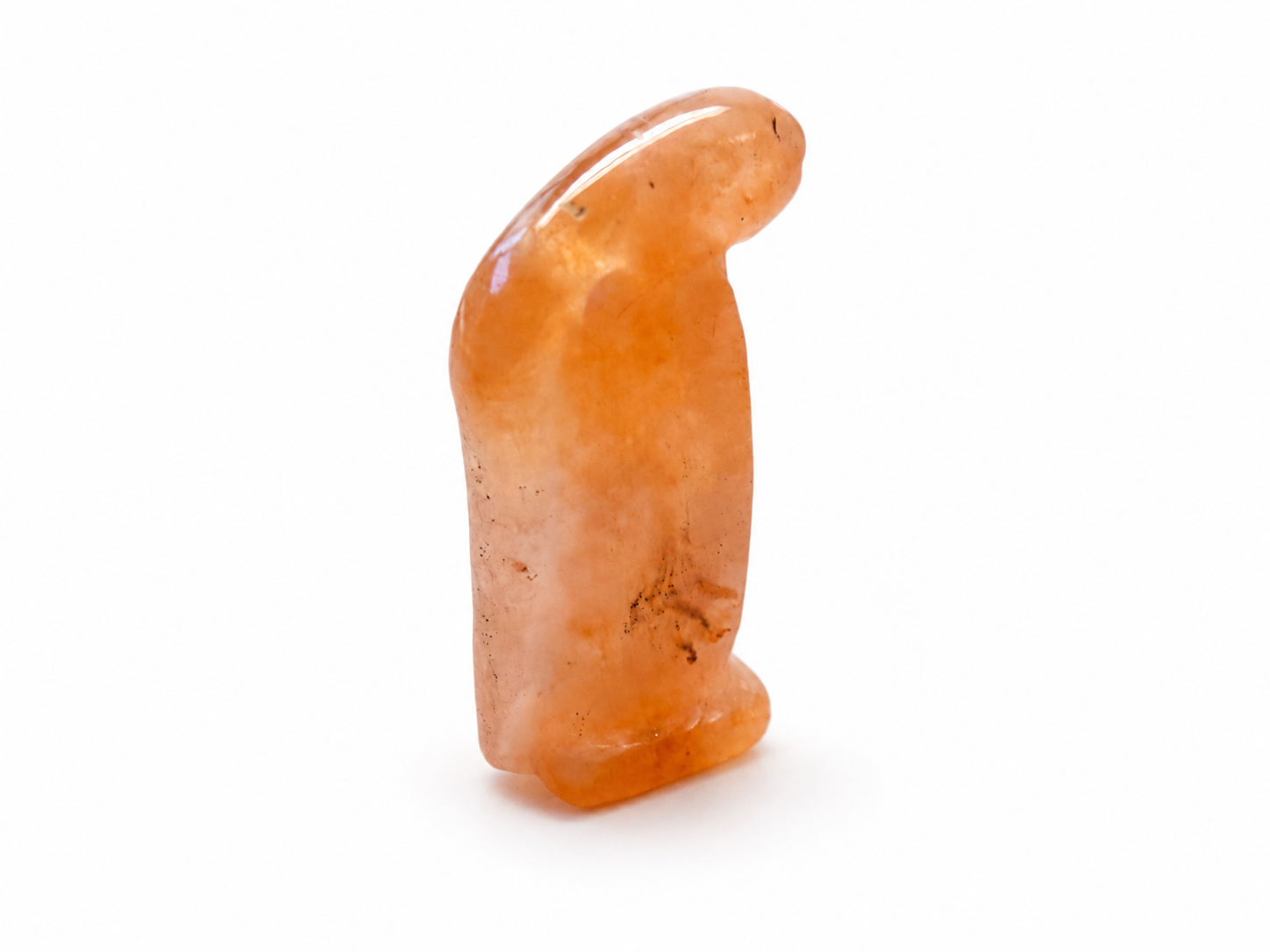
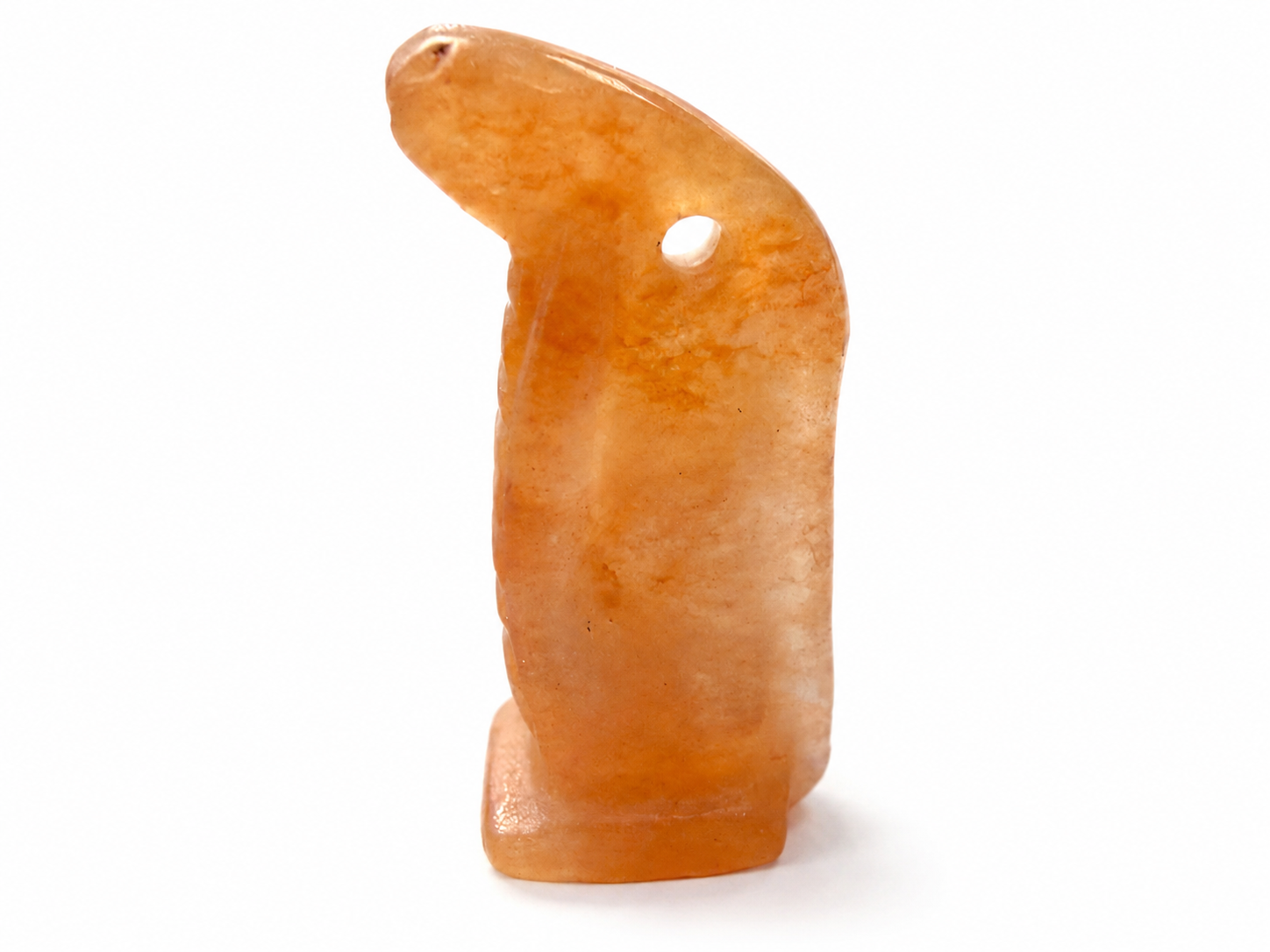
Ancient Egyptian Cobra Amulet
DocuJewel® 39024.4
Type of Jewel: Ancient Object
Description:
Ancient Egyptian Carnelian Amulet
Cobra
Drilled Hole for a Loop
The cobra was one of the most powerful and protective symbols in ancient Egyptian culture.
Most importantly, it was associated with the uraeus—the rearing cobra often depicted on the crowns of pharaohs. This symbol represented the goddess Wadjet, the patron deity of Lower Egypt. Worn on the forehead, the cobra signified royal authority, divine protection, and legitimacy. It was believed that the cobra could spit fire at enemies, defending the king both physically and spiritually.
More broadly, cobras symbolized:
Protection – guarding temples, tombs, and the pharaoh
Sovereignty – a mark of kingship and power
Divine wrath – capable of striking down enemies of the gods
They were also linked to rebirth and the sun, as snakes shed their skin—making them symbols of renewal and eternity.
In short, the cobra wasn’t feared so much as revered: it embodied a potent mix of danger, protection, and divine authority.
Circa: 1400-1200 BCE
Measurements:
19.5x10x6mm
Type of Jewel: Ancient Object
Description:
Ancient Egyptian Carnelian Amulet
Cobra
Drilled Hole for a Loop
The cobra was one of the most powerful and protective symbols in ancient Egyptian culture.
Most importantly, it was associated with the uraeus—the rearing cobra often depicted on the crowns of pharaohs. This symbol represented the goddess Wadjet, the patron deity of Lower Egypt. Worn on the forehead, the cobra signified royal authority, divine protection, and legitimacy. It was believed that the cobra could spit fire at enemies, defending the king both physically and spiritually.
More broadly, cobras symbolized:
Protection – guarding temples, tombs, and the pharaoh
Sovereignty – a mark of kingship and power
Divine wrath – capable of striking down enemies of the gods
They were also linked to rebirth and the sun, as snakes shed their skin—making them symbols of renewal and eternity.
In short, the cobra wasn’t feared so much as revered: it embodied a potent mix of danger, protection, and divine authority.
Circa: 1400-1200 BCE
Measurements:
19.5x10x6mm